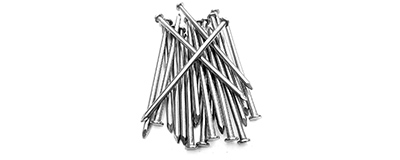
KYA 6d common nails are loose steel nails with a nominal length of 2 inches, a 0.113-inch shank diameter and an approximately 0.266-inch head diameter. The traditional common-nail configuration uses a wide flat head, round smooth shank and diamond point for general wood-to-wood fastening.
The 6d size is used in suitable carpentry, wood construction, pallets, crates, timber formwork and general assembly applications where a 2-inch nail provides the required penetration. Bright steel and galvanized configurations are available within the KYA common nail range.
Bulk packaging options include 50 lb cartons and 25 kg cartons for distributors, construction suppliers, pallet manufacturers and other professional buyers.

6d penny size: nominal 2-inch common nail configuration.
0.113-inch shank: approximately 2.87mm round steel shank.
0.266-inch head: approximately 6.76mm flat-head diameter.
Diamond point: standard common-nail point geometry for wood penetration.
Bright steel option: suitable for general dry interior wood applications where additional corrosion protection is not specified.
Galvanized options: available where additional corrosion protection is required.
Bulk packaging: 50 lb and 25 kg carton formats for commercial purchasing.
Related shank options: smooth, ring and screw-shank nails are available within the wider KYA loose-nail range; confirm the exact requested configuration before ordering.
Request 6d Common Nail Pricing
| Parameter | Specification |
|---|---|
| Model | 6D |
| KYA Code | KYA-6d / KYAS-05 |
| Nail Type | Loose Common Nail |
| Penny Size | 6d |
| Nominal Length | 2" / approximately 50.8mm |
| KYA Listed Metric Length | 50mm |
| Shank Diameter | 0.113" / approximately 2.87mm |
| Head Diameter | 0.266" / approximately 6.76mm |
| Standard Shank | Round Smooth Shank |
| Head | Flat Head |
| Point | Diamond Point |
| Material | Steel |
| Finish Options | Bright, Zinc / Galvanized; confirm EG or HDG configuration when ordering |
| Bulk Packing | 50 lb carton / 25 kg carton |
For purchasing specifications that require a particular standard, coating thickness, material certificate or dimensional tolerance, confirm the exact production specification and documentation before ordering.

The designation 6d is the traditional penny-size description for this common nail. A standard 6d common nail is nominally 2 inches long with a heavier shank than a same-length box nail or sinker nail.
For technical purchasing and construction specifications, it is more precise to identify the nail by both type and dimensions: 6d common nail, 2" × .113", approximately .266" head.
| Nail Type | Nominal Length | Typical Shank Diameter | General Difference |
|---|---|---|---|
| 6d Common | 2" | .113" | Heavier traditional common-nail shank. |
| 6d Box | 2" | Approximately .099" | Thinner shank reduces wood displacement compared with a common nail. |
| 6d Sinker | Approximately 1-7/8" | Approximately .092" | Typically thinner and slightly shorter than a 6d common nail. |
Common, box and sinker nails should not be substituted solely because they share a similar penny designation. Structural and engineered assemblies can depend on the actual nail diameter and length.
| KYA Item | Penny Size | Length | Shank Diameter | Head Diameter | Material |
|---|---|---|---|---|---|
| KYAS-05 | 6d | 2" / 50mm listed | .113" | .266" | Steel |
| KYAS-09 | 10d | 3" / 75mm listed | .148" | .312" | Steel |
| KYAS-12 | 20d | 4" / 100mm listed | .192" | .406" | Steel |
| KYAS-16 | 60d | 6" / 150mm listed | .262" | .531" | Steel |
The table above provides related KYA common-nail size references. This product page specifically focuses on the 6d / 2-inch size.
Bright common nails are uncoated steel fasteners used primarily for dry interior applications where long-term corrosion protection is not required.
Typical uses include general carpentry, interior timber assemblies, wooden packaging and other protected wood-to-wood fastening.
Electro-galvanized nails use an electroplated zinc coating to provide more corrosion protection than bright steel. Electro-galvanized coating should not be described as equivalent to hot-dip galvanizing.
Hot-dip galvanized nails use a hot-dip zinc coating and can be specified where greater corrosion protection is required. Where an ASTM A153/A153M hot-dip coating is required, the exact coating class, thickness and certification should be confirmed for the ordered product.
Stainless steel common nails are available within the wider fastener market for applications requiring corrosion-resistant material throughout the fastener. Confirm the required stainless grade and exact 6d configuration when stainless material is specified.
The traditional common nail uses a round smooth shank. This is the standard configuration for general carpentry, framing-related woodwork, pallets, crates and other construction applications where a smooth common nail is specified.
Ring-shank nails have annular ridges that increase engagement with surrounding wood fibers and can provide greater withdrawal resistance than a comparable smooth-shank fastener.
The actual improvement depends on timber species, density, moisture, ring geometry and penetration depth. A fixed percentage should not be applied to every ring-shank product.
Screw or spiral-shank nails use a twisted profile for increased mechanical engagement in suitable timber. Confirm availability of the required 6d configuration before ordering.
ASTM F1667/F1667M is a reference specification covering driven fasteners including common nails. It addresses dimensional, material, physical-property and finish requirements for the applicable fastener types.
For an order requiring documented ASTM conformity, identify the required standard edition and request the applicable production specification or inspection documentation. A dimensional match alone should not be treated as proof of full conformity.
ASTM A153/A153M covers zinc coatings applied by the hot-dip process to iron and steel hardware. It is therefore relevant when an ordered fastener is specifically supplied with the corresponding hot-dip galvanized coating.
Electro-galvanized nails should not be represented as ASTM A153 hot-dip galvanized fasteners. When A153/A153M is a contractual requirement, confirm coating class and supporting documentation with the ordered HDG product.
Preservative-treated lumber can be more corrosive to steel fasteners than untreated wood. Fastener material and coating should therefore be selected from the wood-treatment supplier, project specification and exposure conditions.
Appropriate hot-dip galvanized or stainless-steel fasteners are commonly specified for treated-wood applications. Electro-galvanized coating should not automatically be substituted where hot-dip galvanizing or stainless steel is required.
A 6d common nail is suitable for selected wood-to-wood connections where a 2-inch fastener provides adequate penetration. Typical professional applications include light timber assembly, carpentry, pallet and crate construction, wooden packaging, timber formwork and temporary wood construction.
For structural framing, sheathing, engineered wood assemblies or code-regulated connections, use the exact nail diameter, length and spacing specified by the drawing, code or engineering documents rather than selecting only by the general “6d” designation.

Loose common nails are used in selected pallet, crate and wooden packaging assemblies. A 2-inch nail can be appropriate for thinner components where the required penetration into the receiving member is achieved.
Where a pallet or export crate has a defined fastening specification, select the nail diameter, length, shank and finish from that design rather than substituting solely because the fastener is described as a common nail.
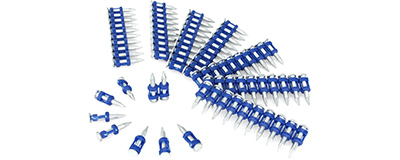
Common nails are used in suitable timber formwork and shuttering assemblies to join wood components used around concrete placement. They should not be confused with hardened concrete nails intended to penetrate concrete or masonry.
The required nail size depends on the formwork timber thickness, temporary loading and construction method.
KYA lists bulk packaging for common nails including 50 lb cartons and 25 kg cartons. Exact net weight, inner packaging, labeling and pallet configuration should be confirmed with the final quotation.
Bulk cartons are suitable for fastener distributors, hardware wholesalers, pallet and crate manufacturers, construction suppliers and other professional users purchasing common nails in volume.
| Order Detail | What to Specify |
|---|---|
| Nail Size | 6d / 2" × .113" common nail. |
| Head | Confirm approximately .266" flat-head requirement. |
| Shank | Specify standard smooth shank or another required configuration. |
| Finish | Bright, electro-galvanized, hot-dip galvanized or other specified finish. |
| Environment | Identify dry interior, exterior, treated lumber, coastal or other exposure conditions. |
| Application | Carpentry, pallet, crate, formwork, packaging or other wood assembly. |
| Standard Requirement | Provide any required ASTM specification, coating class, certificate or inspection requirement. |
| Packing | Confirm 50 lb, 25 kg or other required bulk packing. |
| Quantity | Provide carton, pallet or container quantity requirement. |
Discuss Your 6d Common Nail Requirement
A standard 6d common nail is nominally 2 inches long with a .113-inch shank diameter and approximately .266-inch head diameter.
Two inches converts to approximately 50.8mm. KYA currently lists the nominal metric size as 50mm.
The standard shank diameter is approximately .113 inch / 2.87mm.
The typical 6d common nail head diameter is approximately .266 inch / 6.76mm.
Both are nominally 2 inches long, but the common nail typically has a heavier .113-inch shank while a 6d box nail uses a thinner shank. Do not treat them as automatically interchangeable in specified construction connections.
The traditional steel common nail has a flat head, diamond point and round smooth shank.
KYA offers deformed-shank nail configurations within its loose-nail range. Confirm availability of the exact 6d ring-shank dimensions and finish when ordering.
A fixed percentage should not be assumed without testing of the exact nail and substrate. Ring shanks can increase withdrawal resistance, but performance depends on timber species, moisture, penetration and ring geometry.
Bright steel nails are generally selected for dry interior or protected applications where additional corrosion protection is not required.
Galvanized nails are selected when additional corrosion protection is required. Specify whether electro-galvanized or hot-dip galvanized coating is needed because the two finishes are not equivalent.
No. ASTM A153/A153M addresses zinc coatings applied by the hot-dip process to iron and steel hardware. Electro-galvanized coatings are produced by a different process.
The listed 6d dimensions correspond to the established common-nail size class. If documented ASTM F1667/F1667M conformity is required for a purchase, specify the requirement and confirm the applicable production and inspection documentation with the order.
Appropriate hot-dip galvanized or stainless-steel fasteners are commonly specified for preservative-treated lumber. Confirm the required galvanizing level and fastener material from the wood-treatment supplier and project requirements.
Electro-galvanized coating should not automatically be treated as suitable where the treated-wood specification requires hot-dip galvanizing or stainless steel. Follow the preservative manufacturer's requirements.
They can be used in suitable wood framing and carpentry connections where a 2-inch .113-inch common nail is specified. Many primary structural framing joints require larger nails, so follow the applicable fastening schedule.
Only where the exact 6d common nail and spacing are permitted by the applicable drawing, code or approved assembly. Do not substitute a different nail type or diameter solely because the length is similar.
Yes, in suitable pallet and crate joints where the 2-inch length and .113-inch shank meet the construction requirement. Standardized or load-rated pallets should follow their specified fastener design.
These common steel nails are intended for wood fastening. Their use in concrete formwork refers to joining the timber formwork components, not driving the nail directly into concrete or masonry.
Stainless-steel configurations are available within the common-nail market and KYA's broader product range. Confirm the exact stainless grade, 6d dimensions and current availability when requesting a quotation.
KYA lists bulk packing including 50 lb cartons and 25 kg cartons. Confirm the final net weight, carton specification and pallet configuration with the purchase order.
Provide the required nail size, shank type, finish, application, timber condition, standard or coating requirement, carton weight and purchase quantity.
KYA supplies 6d 2-inch loose common nails for fastener distributors, hardware wholesalers, construction suppliers, pallet and crate manufacturers and professional woodworking users. Specify the required finish, shank configuration, packaging and applicable standard requirements so the correct product can be confirmed before ordering.
KYA lists common nail lengths from 1–6 inches in stock. Availability can vary by size, shank and finish, so confirm the required configuration before ordering. The listed minimum order is one pallet (approximately 800–1,000kg) or one 20-foot container.
A free 5kg sample box is listed, with freight paid by the recipient. Confirm current sample availability and freight terms with KYA.
The product information references ASTM F1667/F1667M and third-party reports. Confirm the applicable standard scope and request current documents for the selected nail type and finish. ASTM A153/A153M applies to hot-dip galvanized coating specifications; it should not be applied to bright or electro-galvanized nails.