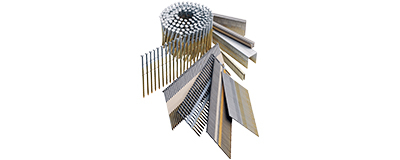
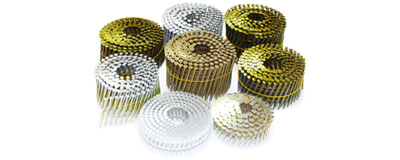
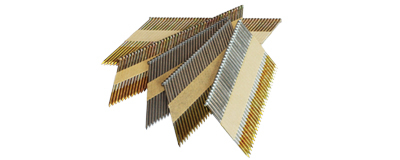
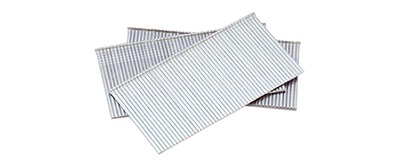
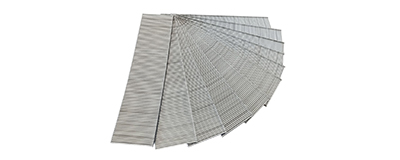
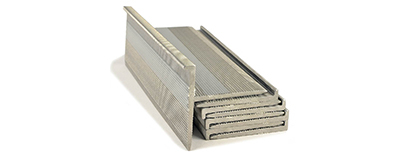
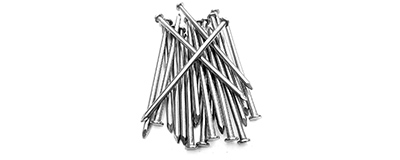
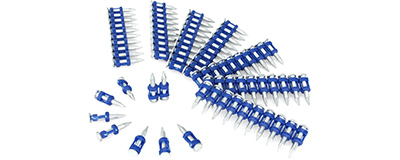
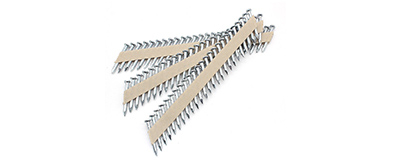
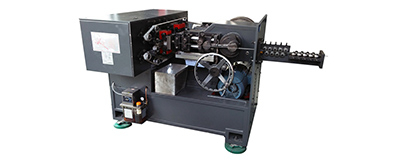
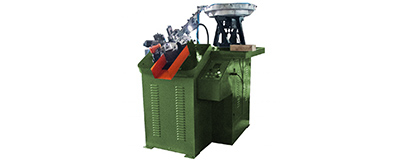
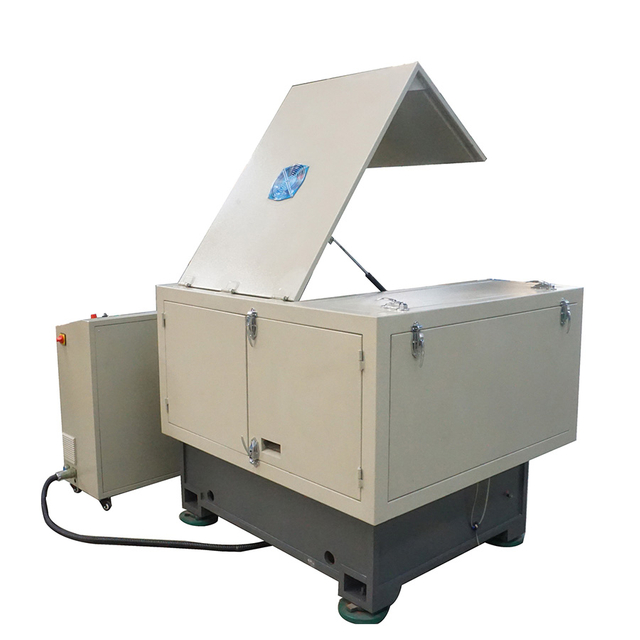
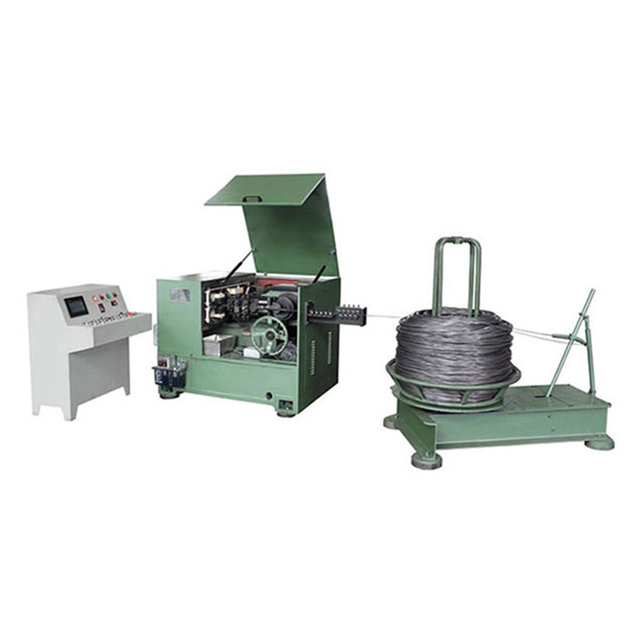
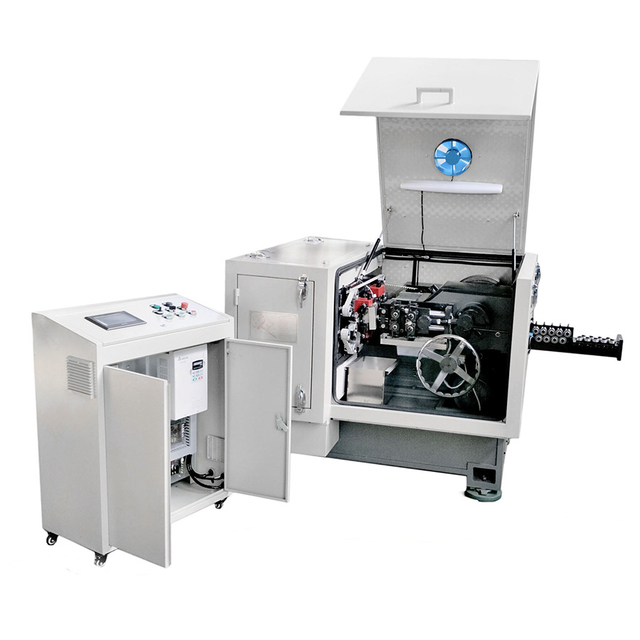
KYA KYA-C Nail Thread Rolling Machine is an automatic high-speed machine designed to roll screw shank, ring shank, anti-loose and other special profiles onto preformed steel nails. It is suitable for nail manufacturers producing threaded nails for construction, pallets, wooden packaging, furniture, framing and pneumatic collated fastener applications.
The KYA-C processes nails with diameters from 1.8mm to 4.5mm and lengths below 100mm. Its rated production speed is up to 1200 nails per minute, with actual output depending on nail diameter, nail length, thread profile, rolling die configuration, feeding condition and production setup.
The machine uses an electromagnetic vibration feeding system and a pair of rolling dies. The fixed die and reciprocating moving die plastically form the nail shank surface without machining away material. By changing the appropriate rolling dies, manufacturers can produce different screw, ring or specialty shank profiles.
| Specification | KYA-C |
|---|---|
| Machine Type | Automatic Nail Thread Rolling Machine |
| Model | KYA-C |
| Processed Nail Diameter | 1.8mm – 4.5mm |
| Maximum Nail Length | Less Than 100mm |
| Production Speed | Up to 1200 pcs/min |
| Main Shaft Diameter | 130mm |
| Motor Power | 5.5kW |
| Standard Listed Power Supply | AC 380V; confirm local voltage, phase and frequency before ordering |
| Feeding System | Electromagnetic Vibration Feeder |
| Thread Forming Method | Rolling / Plastic Deformation Between Thread Rolling Dies |
| Machine Weight | Approx. 1500kg |
| Overall Dimensions | 1400 × 1500 × 1600mm |
| Applicable Nail Profiles | Screw Shank, Ring Shank, Anti-Loose and Custom Rolling Profiles with Suitable Dies |
Production capacity is a rated machine value. Actual output depends on nail dimensions, rolling profile, feeder condition, die design, machine adjustment and operator setup. Confirm the final machine configuration and guaranteed parameters in the purchase contract.

A nail thread rolling machine does not manufacture the complete nail directly from steel wire. It processes preformed loose nails that have already been cut, headed and pointed by a nail making machine.
In the KYA-C, an electromagnetic vibration feeder automatically sorts and delivers the nails to the rolling area. The nail passes between two dies with the required thread profile. One die remains fixed while the other performs a reciprocating movement, pressing and rolling the nail shank so that the steel surface plastically deforms into the required ring or screw pattern.
| Process Step | Function |
|---|---|
| 1. Load Loose Nails | Preformed nails are supplied to the vibration feeding system. |
| 2. Automatic Orientation | The feeder sorts and aligns nails for continuous delivery into the rolling section. |
| 3. Nail Positioning | The nail enters the correct position between the fixed and moving rolling dies. |
| 4. Thread Rolling | Pressure and relative movement plastically form the required ring, screw or specialty profile onto the nail shank. |
| 5. Finished Nail Discharge | Threaded loose nails leave the machine and can proceed to inspection, surface treatment, collating or packing. |


Up to 1200 Nails Per Minute: Designed for high-volume nail shank rolling, with actual production output depending on nail size and rolling profile.
1.8-4.5mm Nail Diameter Range: Supports a broad range of construction, pallet and collated nail sizes.
Up to 100mm Nail Length: Suitable for many common pneumatic and industrial nail specifications.
Electromagnetic Vibration Feeder: Automatically sorts and feeds preformed nails into the rolling section.
Interchangeable Rolling Profiles: Different dies can be used to produce ring shank, screw shank, anti-loose or other specialty nail profiles.
Plastic-Deformation Forming: The shank profile is formed by rolling pressure rather than cutting material away from the nail.
Adjustable Production Speed: Production can be adjusted according to nail dimensions, thread type and line requirements.
Designed for Production-Line Integration: Can be installed between nail making equipment and downstream coil nail, paper tape nail or other collating systems.
| Nail Profile | How KYA-C Is Used |
|---|---|
| Screw Shank Nails | Suitable rolling dies form a spiral or screw-type profile around the preformed nail shank. |
| Ring Shank Nails | Ring-profile dies form annular grooves or rings around the nail shank. |
| Anti-Loose Nails | Special die profiles can be configured to produce specified anti-withdrawal or anti-loose shank patterns. |
| Special-Shaped Nail Shanks | Custom rolling profiles may be possible when suitable tooling is designed for the nail specification. |
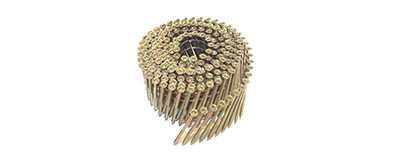
| Coil Nail Blanks | KYA-C can roll the shank of loose nails that will later be welded and collated into coil nails. |
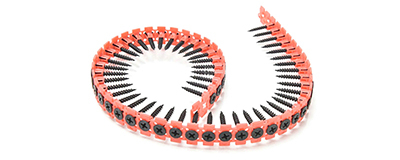
| Paper Strip Nail Blanks | Threaded loose nails can subsequently be arranged and bonded into paper strip nails using separate collating equipment. |
The KYA-C is normally a secondary nail-processing machine. It should be positioned after the basic nail forming process and before any required collating or final packaging process.
| Equipment | Function |
|---|---|
| Wire Drawing Machine | Prepares steel wire to the required diameter when raw wire rod must be reduced before nail making. |
| Wire Nail Making Machine | Forms the basic loose nail by straightening, feeding, heading, cutting and pointing the steel wire. |
| KYA-C Thread Rolling Machine | Rolls ring, screw or specialty patterns onto the shank of the preformed nail. |
| Surface Treatment / Polishing | Used where the finished nail specification requires cleaning, polishing or subsequent coating processes. |
| Coil Nail Welding Machine | Arranges and welds loose threaded nails onto wire to form finished coil nails. |
| Paper Tape Nail Collator | Arranges loose nails at the specified angle and bonds them into paper-collated strips. |
| Packing Equipment | Counts and packages finished loose or collated nails for distribution and export. |


Screw shank and ring shank nails require different rolling profiles. Manufacturers should specify the finished nail design when ordering the machine and dies because nail diameter alone is not enough to determine tooling.
| Feature | Screw Shank | Ring Shank |
|---|---|---|
| Profile | Helical / spiral rolling pattern | Annular ring pattern |
| Required Tooling | Screw-profile rolling dies | Ring-profile rolling dies |
| Typical Nail Markets | Pallets, timber packaging, construction and collated nails | Pallets, siding, framing, packaging and other applications requiring increased withdrawal resistance |
| Machine Selection | Confirm nail diameter, length, profile dimensions, rolling length and expected capacity before ordering dies and machine configuration. | |
The rolling dies determine the finished nail shank profile. When ordering a KYA-C machine, provide a finished nail drawing, sample or detailed shank dimensions so the required die profile can be confirmed.
| Information Required | Why It Matters |
|---|---|
| Nail Diameter | Determines whether the nail falls within the 1.8-4.5mm processing range and affects die geometry. |
| Nail Length | Must remain below the supported maximum and affects feeding and handling. |
| Shank Profile | Determines whether screw, ring or another die pattern is required. |
| Rolling Length | Defines how much of the nail shank requires profiling. |
| Pitch / Ring Spacing | Determines the geometry of the finished shank pattern. |
| Finished Nail Sample | Helps confirm tooling when replacing an existing production process. |
Send Nail Specification for Die Selection
KYA offers different thread rolling machines for different production capacities. The KYA-C provides a wider listed nail diameter range, while the KYA-2000 is designed for higher maximum throughput.
| Specification | KYA-C | KYA-2000 |
|---|---|---|
| Nail Diameter | 1.8-4.5mm | 1.8-3.8mm |
| Nail Length | <100mm | Up to 100mm |
| Rated Speed | Up to 1200 pcs/min | Up to 2000 pcs/min |
| Motor Power | 5.5kW | 9kW |
| Best Selection Basis | Wider diameter requirement and standard high-volume production | Higher throughput where nail diameter fits the supported range |
Stable thread rolling depends on consistent nail dimensions, correct die adjustment and reliable feeding. Before continuous production, operators should check the feeder track, rolling dies, die gap, nail orientation, lubrication points, drive components and machine fasteners.
Rolling dies are production tooling and should be selected for the target screw or ring profile. Factories producing several nail types should confirm the required spare die sets and changeover procedure when purchasing the machine.
Nail diameter, length, head size and straightness should remain consistent enough for reliable vibration feeding. Poorly formed or heavily deformed incoming nails may affect feeding stability and finished shank consistency.
For accurate machine selection and die configuration, provide the actual nail specification instead of requesting only a generic thread rolling machine price.
| Buyer Information | Required Details |
|---|---|
| Nail Diameter | Smallest and largest shank diameter to be processed. |
| Nail Length | Required finished nail lengths below the machine's supported maximum. |
| Thread Type | Ring shank, screw shank, anti-loose or custom profile. |
| Threaded Section Length | Required rolling length on the nail shank. |
| Required Output | Target nails per minute or production volume per shift. |
| Finished Product | Loose threaded nails, coil nails, paper strip nails or another collated product. |
| Electrical Supply | Local voltage, phase and frequency. |
| Nail Drawing or Sample | Recommended for confirming die geometry and finished thread profile. |
Get KYA-C Thread Rolling Machine Price
A nail thread rolling machine processes already formed nails and rolls a screw, ring or specialty pattern onto the nail shank using profiled dies and plastic deformation.
The KYA-C is specified for nail diameters from 1.8mm to 4.5mm and nail lengths below 100mm.
The rated production speed is up to 1200 nails per minute. Actual production depends on nail diameter, nail length, rolling profile, die setup and feeding conditions.
Yes. With suitable ring-profile rolling dies, the KYA-C can form annular ring patterns onto compatible preformed nail shanks.
Yes. Suitable screw-profile dies can roll a spiral or screw pattern onto the nail shank.
No. A wire nail making machine first produces the loose nail. The KYA-C is a secondary process machine that rolls the required profile onto the already formed nail shank.
No. The KYA-C can thread-roll the loose nail blanks used for coil nail production. A separate coil nail welding and collating machine is required to arrange, weld and coil the nails.
No. It can produce the required shank profile on the loose nails. A separate paper tape collating machine is then used to arrange and bond the nails into strips.
The listed KYA-C configuration uses an electromagnetic vibration feeding system to sort and deliver nails automatically to the rolling section.
The listed machine uses a 5.5kW motor.
The current KYA specification lists AC 380V. Buyers should provide local voltage, phase and frequency requirements before ordering so the electrical configuration can be confirmed.
The nail is pressed between profiled rolling dies. Relative die movement plastically deforms the nail surface into the required ring or screw pattern without cutting the thread from the shank.
No. Different shank profiles require corresponding rolling die designs. Buyers should provide the required nail drawing or sample when ordering tooling.
Multiple nail sizes may be processed when they fall within the machine's 1.8-4.5mm diameter and under-100mm length range and when suitable feeding adjustments and rolling dies are available.
Provide nail diameter, nail length, rolling length, screw pitch or ring spacing, required profile geometry and preferably a drawing or physical sample.
The KYA-C is rated for 1.8-4.5mm nails at up to 1200 pcs/min with a 5.5kW motor. The KYA-2000 is designed for higher throughput of up to 2000 pcs/min, with a listed 1.8-3.8mm nail diameter range and 9kW motor.
A complete coil nail production workflow may require wire preparation, nail making, thread rolling where needed, surface treatment and a coil nail welding/collating machine. Provide the finished coil nail specification and required output so the applicable equipment can be confirmed.
Send the nail diameter, nail length, required shank profile, rolling length, target production speed, finished nail type, electrical supply, destination country and preferably a nail drawing or sample.
Looking for a nail thread rolling machine for screw shank or ring shank nails? Send KYA Fasteners your nail diameter, length, required thread profile, rolling length, target production capacity, electrical supply and finished nail type. We can use these specifications to confirm the appropriate KYA-C configuration and rolling dies.