Views: 42 Author: Site Editor Publish Time: 2020-06-15 Origin: Site
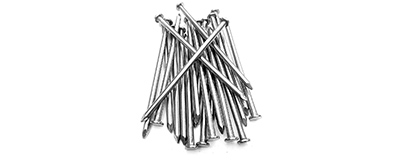
The most common nail sizes used for wood framing are 8d, 10d and 16d nails. An 8d nail is approximately 2-1/2 inches long, a 10d nail is 3 inches long, and a traditional 16d common nail is 3-1/2 inches long.
For many general 2x4 and 2x6 framing applications, builders use 3-inch, 3-1/4-inch or 3-1/2-inch framing nails. However, the correct framing nail size depends on the wood members being connected, the nailing method, the nail diameter, the required number of fasteners and the applicable building code or engineered fastening schedule.
Quick answer: Use 16d common nails or an approved collated framing nail for major 2x lumber connections, 10d nails for many wall-framing and built-up member applications, and 8d nails for selected toenailing, blocking and sheathing applications. Always verify the project fastening schedule before substituting one nail for another.
The following framing nail size chart provides a practical comparison of commonly used hand-driven and collated framing nails. Nail diameter can vary between common nails, box nails, sinkers and pneumatic framing nails, even when the nails have a similar length.
| Nail Size | Nominal Length | Typical Diameter | Common Framing Uses | Important Note |
|---|---|---|---|---|
| 8d common | 2-1/2 in. | Approximately 0.131 in. | Selected toenailing, blocking, furring and wood structural panel fastening | Use only where the fastening schedule permits an 8d nail. |
| 10d common | 3 in. | Approximately 0.148 in. | Wall framing, blocking, headers and selected stud-to-plate connections | The required number of nails depends on the connection. |
| 16d common | 3-1/2 in. | Approximately 0.162 in. | Structural wall framing, plates, studs and heavy-duty wood connections | A traditional 16d common nail is thicker than many pneumatic framing nails. |
| 16d sinker | Commonly 3-1/4 in. | Commonly about 0.148 in. | General framing and hand-driven construction | Do not automatically treat a 16d sinker as equivalent to a 16d common nail. |
| Collated framing nail | 3 to 3-1/2 in. | Commonly 0.120 to 0.162 in. | Pneumatic and cordless framing nailers | Match the length, diameter, head, angle and collation to the tool and specification. |
The letter “d” in a nail size represents the traditional penny system. It comes from the Latin word denarius, which referred to a Roman coin. Although the system is old, it is still widely used in the United States to identify common construction nail sizes.
The penny designation indicates a general nail size, but it does not provide every detail needed for a structural connection. For example, nails described as 16d common, 16d box and 16d sinker may have different lengths and shank diameters.
When selecting framing nails, compare the actual measurements printed on the packaging, such as 3-1/2 in. × 0.162 in. or 3 in. × 0.131 in., rather than relying only on the penny designation.
For framing standard 2x4 walls, 16d common nails have traditionally been used for many stud-to-plate and face-nailed connections. Pneumatic framers also commonly use approved 3-inch, 3-1/4-inch or 3-1/2-inch collated framing nails.
A longer nail is not automatically better. A nail that is too long or too thick can split dry lumber, penetrate beyond the connected members or interfere with utilities. A nail that is too short or too thin may not provide the required penetration and lateral resistance.
For load-bearing walls, shear walls, roof framing and engineered wood assemblies, follow the approved construction drawings, local building code and fastening schedule. These documents may specify the nail length, shank diameter, head type, spacing and number of nails required for each connection.
| Framing Application | Common Nail Choice | Selection Guidance |
|---|---|---|
| Studs to top or bottom plates | 10d, 16d or approved 3-inch to 3-1/2-inch framing nails | Check whether the connection is end-nailed, face-nailed or toe-nailed. |
| Double top plates | Commonly 10d, 16d or specified collated framing nails | Nail size and spacing must follow the required plate connection schedule. |
| Built-up headers | 10d, 16d or engineered fasteners | Header thickness, member count and nail pattern determine the correct fastener. |
| Toenailing studs, joists or rafters | Commonly 8d or 10d where permitted | The angle and number of toenails affect connection strength. |
| Wall and roof sheathing | Often 6d or 8d panel nails | Panel thickness, edge spacing, field spacing and wind or seismic requirements matter. |
| Subflooring | Ring-shank or screw-shank nails of the specified length | Enhanced withdrawal resistance can help reduce movement and floor squeaks. |
| Joist hangers and metal connectors | Manufacturer-specified connector nails | Do not replace approved connector nails with ordinary framing nails. |
Common nails have relatively thick shanks and large heads, making them suitable for structural framing and general construction. They provide greater shear capacity than many thinner nails of the same nominal length.
Box nails have thinner shanks that can reduce the risk of splitting wood, but their smaller diameter may also reduce connection capacity. A box nail should not be substituted for a common nail unless the fastening schedule specifically permits it.
Sinker nails are usually slightly shorter or thinner than traditional common nails and may include a textured or coated surface for easier driving. They are convenient for general framing, but the actual dimensions must be checked before using them in a prescribed structural connection.
Smooth-shank nails are widely used for wall framing and general wood construction. They drive quickly and are available in a broad range of lengths, diameters, head styles and collation types.
Ring-shank nails have annular ridges that increase withdrawal resistance. They are commonly selected for applications such as subflooring, sheathing, pallets, fencing and other assemblies where vibration or wood movement could cause a smooth nail to loosen.
Screw-shank nails rotate as they enter the wood and provide strong withdrawal resistance. They can be useful for hardwood, pallets, decking and applications requiring improved holding power, subject to the project specification.
Explore KYA’s available collated framing nails in smooth, ring and screw-shank configurations.
A framing nail must match the nailer’s accepted length, shank diameter, collation angle, head style and collation material. Using the wrong nail strip can cause feeding problems, jams, incomplete driving or damage to the tool.
| Nailer Angle | Typical Collation | Common Characteristics |
|---|---|---|
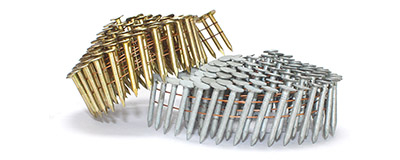
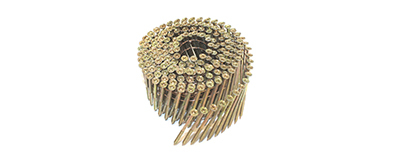
| 15-degree | Wire-collated coil nails | High magazine capacity and full round-head options |
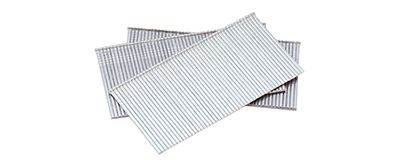
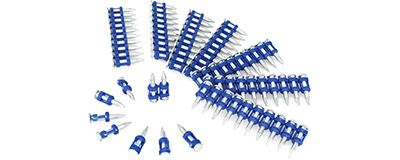
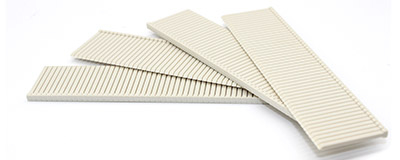
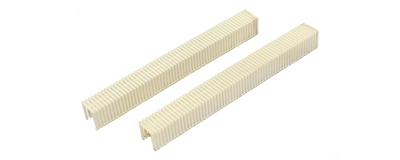
| 20- to 22-degree | Plastic-collated strip nails | Common full round-head framing nail format |
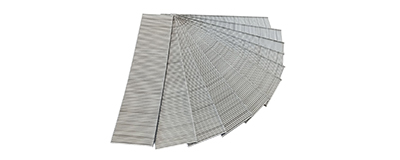
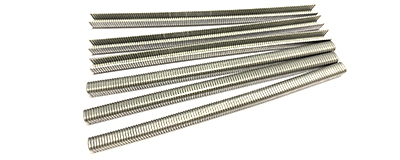
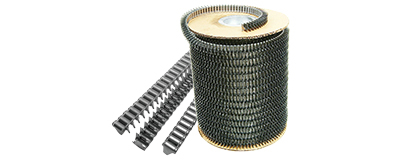
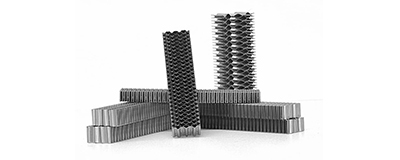
| 28-degree | Wire-collated strip nails | Compact magazine with offset or clipped-head options |
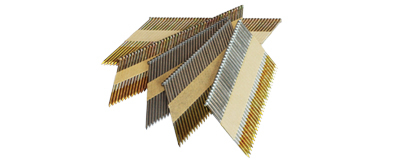
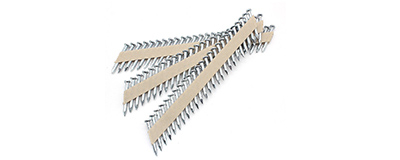
| 30- to 34-degree | Paper tape-collated strip nails | Compact strips that provide access in confined framing areas |
Before purchasing nails, check the model number and fastener specification printed on your framing nailer. A 21-degree nail strip, for example, should not be loaded into a nailer designed for 30- to 34-degree paper-collated nails.
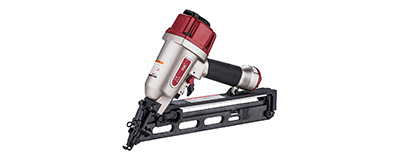
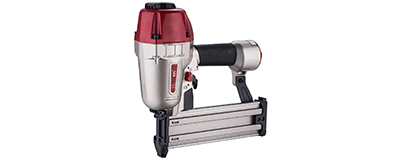
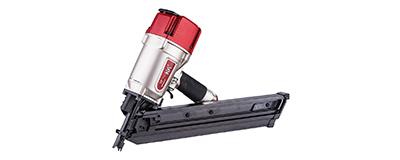
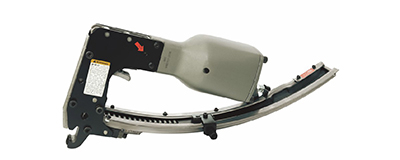
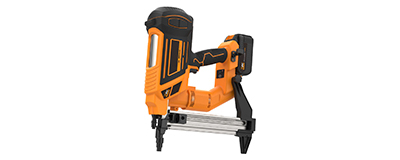
KYA also supplies pneumatic framing nailers for compatible collated nail systems.
Bright steel nails are generally intended for dry interior framing where corrosion protection is not required. They should not be used in exposed outdoor environments or with preservative-treated lumber unless specifically approved.
Electro-galvanized nails provide a relatively thin zinc coating for limited corrosion resistance. They may be suitable for protected or mildly humid environments but are generally not the first choice for severe exterior exposure.
Hot-dip galvanized framing nails have a heavier zinc coating and are frequently used for outdoor framing, fencing, decking and compatible treated-lumber applications. Confirm that the coating complies with the lumber supplier’s and building specification’s corrosion requirements.
Stainless steel nails provide high corrosion resistance for coastal areas, high-moisture environments, cedar, redwood and other demanding exterior applications. The required stainless steel grade should be selected according to the exposure conditions.
Use the following process when selecting nails for wall framing, roof framing, floor framing or other structural wood construction:
Identify the wood members and the connection being made.
Determine whether the connection is face-nailed, end-nailed or toe-nailed.
Check the required nail length, diameter, quantity and spacing.
Match the nail head, shank and point to the application.
Select a corrosion-resistant coating for exterior or treated-lumber use.
Confirm the nail angle and collation type if using a framing nailer.
Verify compliance with the approved plans, connector instructions and local building code.
Selecting nails by length without checking the shank diameter.
Substituting box nails or sinkers for common nails without approval.
Using finish nails or brad nails for structural framing.
Using ordinary framing nails in joist hangers or structural connectors.
Using bright steel nails outdoors or in incompatible treated lumber.
Loading the wrong nail angle or collation type into a framing nailer.
Assuming that a longer nail can compensate for an incorrect nail quantity or spacing.
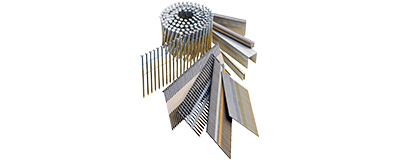
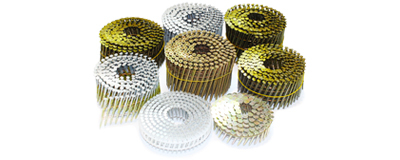
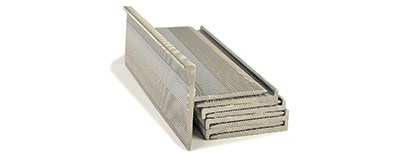
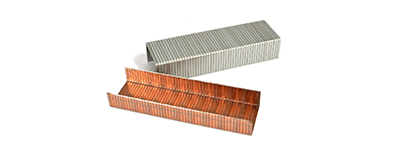
KYA Fasteners supplies collated framing nails for pneumatic and gas-powered fastening systems. Available configurations include plastic-collated, paper-collated and wire-collated nails with smooth, ring or screw shanks.
Buyers can specify nail length, shank diameter, collation angle, head style, surface treatment, packaging and application requirements. Product selection should be based on the customer’s nailer specifications and the fastening standard used in the target market.
View the complete framing nail product range or review our guide on how to choose the right nails .
Need compatible framing nails for your nailer or construction market?
Send KYA your required nail length, diameter, collation angle, shank type, coating and order quantity for product recommendations and quotation support.
Request a Framing Nail QuoteMany 2x4 wall-framing connections use 10d, 16d or approved 3-inch to 3-1/2-inch collated framing nails. The correct nail depends on whether the connection is face-nailed, end-nailed or toe-nailed and on the applicable fastening schedule.
Three-inch nails are used for many framing connections, especially when the required shank diameter and nail quantity are specified. They are not a universal substitute for every 3-1/2-inch or 16d common nail connection.
Use the length and diameter required by the construction documents and accepted by the nailer. A 3-1/4-inch framing nail may be appropriate for many pneumatic applications, while a 3-1/2-inch nail may be required for specific structural connections.
A traditional 10d common nail is approximately 3 inches long and 0.148 inch in diameter. A traditional 16d common nail is approximately 3-1/2 inches long and 0.162 inch in diameter. The 16d common nail is longer and thicker, but both sizes appear in different framing schedules.
Yes. An 8d nail can be used for selected framing tasks such as panel fastening, blocking and certain toenail connections when permitted by the fastening schedule. It is generally not the primary choice for heavy stud-to-plate connections.
Framing nail dimensions are more accurately compared by shank diameter than by gauge alone. Common pneumatic framing nail diameters include approximately 0.113, 0.120, 0.131, 0.148 and 0.162 inch, depending on the nailer and structural specification.
Ring-shank nails provide greater resistance to withdrawal than comparable smooth-shank nails, but they are not automatically required for every framing connection. Smooth-shank nails remain common for wall framing, while ring-shank nails are frequently used for sheathing, subflooring and applications exposed to movement.
Interior framing in dry conditions may use bright nails. Exterior construction, damp environments and preservative-treated lumber normally require compatible galvanized or stainless steel fasteners. Always check the lumber treatment and project corrosion requirements.
Ordinary framing nails should not be used unless the connector manufacturer specifically approves them. Joist hangers and structural connectors normally require designated connector nails with the correct length, diameter and corrosion protection.
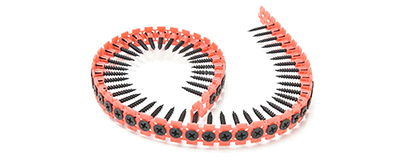
Only approved structural screws should replace framing nails, and only when the design or manufacturer provides an equivalent fastening schedule. General-purpose or drywall screws are not suitable substitutes for structural framing nails.
Buy the angle specified by your framing nailer. Common systems include 15-degree coil nails, 20- to 22-degree plastic-collated nails, 28-degree wire-collated nails and 30- to 34-degree paper-collated nails. Nail angles are not interchangeable between incompatible tools.
The most common framing nail sizes are 8d, 10d and 16d, corresponding approximately to lengths of 2-1/2 inches, 3 inches and 3-1/2 inches. These sizes cover many wall, floor, roof, blocking and sheathing applications, but no single nail size is correct for every framing connection.
Select framing nails according to their actual length and diameter, the connection method, required nail quantity, wood type, exposure conditions and nailer compatibility. For structural construction, the approved fastening schedule and local code should always take priority over general rules of thumb.