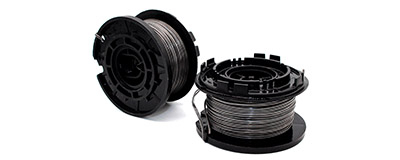
KYA TW1061T 19 gauge rebar tie wire is a twin-wire reel produced for professional automatic rebar tying applications using the TW1061T reel format. The standard KYA configuration uses approximately 1.0mm wire, a 33–34m per strand (66–68m total twin-wire length), approximately 0.45kg net weight per reel, and an estimated 170–260 ties per reel depending on the rebar combination and operating conditions.
This wire format is intended for buyers operating or servicing MAX RB441T TwinTier-class rebar tying equipment. Because automatic tying tools depend on accurate reel dimensions, wire diameter, coating thickness and consistent payout, replacement wire should be tested in the actual machine before high-volume use.
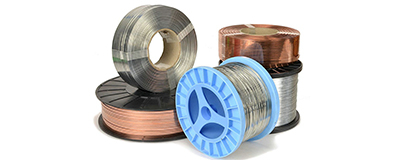
Available KYA configurations include black annealed, electro-galvanized and polyester-coated tie wire for different reinforcement and project requirements.

19 gauge wire: approximately 1.0mm nominal diameter for the standard KYA configuration.
Twin-wire reel: two wire strands are fed by the TwinTier-style tying mechanism during each tying cycle.
33–34m per-strand specification: KYA-listed per-strand length; both strands total approximately 66–68m.
0.45kg per reel: compact consumable spool for automatic rebar tying.
Approximately 170–260 ties: actual output varies with rebar diameter, bar combination, wire type and machine settings.
Multiple material options: black annealed, electro-galvanized and polyester-coated wire.
Automatic tying applications: suitable for precast, foundations, reinforced concrete, roads, bridges, walls, pools and conduit fastening where the tool capacity permits.
Controlled wire ductility: intended to support feeding, bending and twisting during automatic tying.
Request TW1061T Tie Wire Pricing
| Parameter | Specification |
|---|---|
| KYA Code | KYA-TW1061T |
| Product Type | Twin Rebar Tie Wire Reel |
| Gauge | 19 Gauge |
| Nominal Wire Diameter | 1.0mm for standard wire; confirm finished diameter separately for coated configurations |
| Reel Length | Approximately 33–34m per strand (66–68m total) |
| KYA Listed Length Reference | 215ft total wire length across both strands (approximately 66–68m) |
| Net Weight | Approximately 0.45kg per reel |
| Estimated Ties per Reel | Approximately 170–260 ties depending on rebar combination and operating conditions |
| Tie Configuration | Twin-wire, single-wrap tying cycle |
| KYA Listed Tensile Strength | 55,800–81,300 lb/in²; confirm exact specification for the selected wire material and production batch |
| Material / Finish Options | Black Annealed, Electro-Galvanized, Polyester-Coated |
| Reference Reel Format | TW1061T 19GA TwinTier-class reel format |
| Primary Tool Reference | MAX RB441T TwinTier; replacement-reel fit and feeding should be confirmed before volume use |
The listed tensile range and ties-per-reel figures are product reference specifications. Actual tying performance depends on wire material, rebar combination, reel geometry, machine condition and operating settings.

TW1061T is a 19GA twin-wire reel format used by TwinTier automatic rebar tying systems. Two wire strands are fed around the reinforcement intersection during the machine's tying cycle.
The wire is a consumable component of the tying system. The machine's dual-wire feeding, pull-back, bending and twisting mechanisms determine tying speed, wire consumption and final tie profile.
| Feature | TW1061T Twin Wire | Conventional Hand Tie Wire |
|---|---|---|
| Wire Format | Purpose-made reel with paired wire paths. | Bulk coil or precut wire for manual tying. |
| Installation | Automatic feeding, bending, twisting and cutting by the rebar tying tool. | Manually wrapped and twisted using pliers or a manual tying tool. |
| Reel Geometry | Must match the automatic tool magazine and wire-feed path. | Normally not designed for an automatic TwinTier magazine. |
| Wire Diameter | 19GA class for TW1061T-format systems. | Varies by manual tying method and project requirement. |
| Wire Family | Gauge Class | Tool System |
|---|---|---|
| TW1061T | 19GA | TwinTier twin-wire system. |
| TW898 | 21GA class | Earlier single-wire MAX Re-Bar-Tier system. |
TW898 and TW1061T should not be treated as interchangeable consumables. Wire gauge, reel construction and feed mechanism differ between the two systems.

Black annealed low-carbon steel wire is a general-purpose configuration for concrete reinforcement work. Annealing provides the ductility required for repeated feeding, bending and twisting by an automatic rebar tying tool.
Choose black annealed wire where the project does not require a specific galvanized, polymer-coated or stainless-steel tie wire.
Electro-galvanized wire has a zinc coating over the steel surface for additional corrosion resistance compared with untreated black steel. KYA currently lists an approximately 5-micron zinc coating for this product family.
Galvanized tie wire should be selected according to the reinforcement system and project specification. A thin electro-galvanized coating should not automatically be described as suitable for every marine, chloride or highly corrosive environment.
Polyester-coated tie wire adds a polymer layer over the base wire. KYA lists an approximately 0.05mm coating within this product family.
Coated wire is commonly considered when tying epoxy-coated reinforcement or where a project specifies a coated tie wire. The finished outside diameter should be confirmed because the coating changes the wire's total feed dimension.
| Wire Type | General Use | Selection Note |
|---|---|---|
| Black Annealed | General concrete reinforcement tying. | Provides the ductility required for automatic twisting. |
| Electro-Galvanized | Projects requiring additional surface corrosion protection. | Confirm zinc-coating requirement and exposure conditions. |
| Polyester-Coated | Epoxy-coated reinforcement and applications specifying coated tie wire. | Confirm finished diameter and project coating requirements. |
The original TwinTier consumable family includes annealed, electro-galvanized, polymer-coated and stainless-steel TW1061T variants. These designations are useful for buyers identifying the required wire class and finish.
| Reference Designation | Wire Type | Nominal Class |
|---|---|---|
| TW1061T | Annealed Steel Wire | 19GA / 1.0mm class |
| TW1061T-EG | Electro-Galvanized Wire | 19GA / 1.0mm class |
| TW1061T-PC | Poly-Coated Wire | 19GA class; finished coated diameter differs from bare wire |
| TW1061T-S | Stainless Steel Wire | 19GA / 1.0mm class |
These designations describe the original equipment wire family. KYA-TW1061T is an independent replacement-format product and should not be presented as genuine MAX-branded wire.
KYA lists an estimated range of 170–260 ties per reel. This number changes because a larger reinforcement intersection requires more wire to wrap around the bars.
| Factor | Effect |
|---|---|
| Rebar Diameter | Larger bars generally consume more wire per tie. |
| Number of Bars | Three- and four-bar combinations can consume more wire than smaller two-bar intersections. |
| Wire Coating | Coated-wire dimensions and feed behavior can differ from bare wire. |
| Tool Adjustment | Tie tension and tool setup influence the completed tie and wire consumption. |
| Tool Condition | Feed components, wire guides and twisting parts must operate correctly for consistent reel output. |
Automatic rebar tying wire should not be selected by gauge alone. The reel must also fit the magazine and feed mechanism, and the wire must have suitable diameter, straightness, ductility and surface condition.
KYA-TW1061T is produced as a replacement-format product for buyers evaluating TW1061T-class supply. It is not an original MAX-branded consumable. Test reel feeding, completed tie formation and wire breakage behavior in the actual machine before bulk use.
| Compatibility Check | What to Verify |
|---|---|
| Tool Model | Confirm the exact TwinTier rebar tying tool model. |
| Reel Format | Confirm the machine requires TW1061T-class twin-wire reels. |
| Wire Diameter | Approximately 1.0mm for standard KYA wire; coated versions require separate confirmation. |
| Spool Geometry | Reel body and feed position must match the tool magazine. |
| Wire Ductility | Wire must bend and twist without repeated fracture. |
| Surface Finish | Coating must feed smoothly through the wire guide without excessive abrasion or buildup. |
| Trial Operation | Check several common rebar combinations before committing to volume production. |
TwinTier equipment uses a dual-wire feeding mechanism that feeds two strands simultaneously. The tool mechanism is responsible for its rapid tying cycle.
For this reason, TW1061T replacement wire should not independently be described as making a tool twice as fast. The wire's role is to feed consistently and form correctly within the specified tying system.
TwinTier tools use wire pull-back and bending mechanisms to control the amount of wire used around the reinforcement intersection and to form a relatively compact completed tie.
Final tie height depends on the machine, rebar combination and wire behavior. It should not be described as a fixed percentage reduction unless the exact comparison and test conditions are documented.
Rebar tying wire requires a balance between tensile strength and ductility. Wire that is too hard or brittle may fracture during bending or twisting, while inconsistent soft wire can affect tie formation.
KYA lists a tensile-strength range of 55,800–81,300 lb/in² for this product family. Buyers requiring a specific mechanical-property range should confirm the selected material and production specification before ordering.

Precast concrete reinforcement
Building foundations
Road and bridge construction
Tilt-up concrete construction
Reinforced concrete floors
Concrete walls
Retaining walls
Swimming pool reinforcement
Radiant heating tubing fastening
Electrical conduit fixing
Reinforcing mesh tying where the tool capacity permits

Precast reinforcement production involves repeated rebar intersections that must remain positioned before and during concrete placement. Automatic tying tools can reduce repetitive manual tying work in suitable production environments.
Select the appropriate black annealed, galvanized or coated wire according to the reinforcement specification and plant requirements.
Twin-wire rebar tying systems are used to secure reinforcing bars during assembly of foundations, slabs and reinforced concrete walls.
Tie wire holds reinforcement in position during placement and construction. It is not a substitute for the structural reinforcement or engineered connection requirements of the concrete design.
Road and bridge reinforcement can involve a high number of repeated bar intersections, making automatic tying suitable for many reinforcement operations.
Wire finish should be selected from the actual project specification. Do not assume that standard electro-galvanized wire automatically satisfies every bridge, coastal or chloride-exposure requirement.
Polyester-coated tie wire can be specified where coated tie wire is required around epoxy-coated reinforcement. The polymer layer can provide separation between the steel tie wire and the coated reinforcing bar.
Confirm the required coating material, coating thickness and finished wire diameter with the project specification before ordering.
| Order Information | What to Provide |
|---|---|
| Rebar Tier | Exact manufacturer and machine model. |
| Reel Format | Confirm TW1061T twin-wire format. |
| Wire Finish | Specify black annealed, electro-galvanized or polyester-coated. |
| Reinforcement Type | Standard, galvanized, epoxy-coated or other reinforcement. |
| Typical Rebar Combination | Provide common bar diameters and the number of bars at the intersection. |
| Application | Precast, foundation, road, bridge, floor, wall, pool, conduit or other reinforcement work. |
| Quantity | Provide reels, cartons, pallets or annual consumption requirement. |
Discuss Your TW1061T Requirement
KYA-TW1061T is KYA's 19 gauge twin-wire reel produced for buyers sourcing TW1061T-format consumables for automatic rebar tying applications.
The standard KYA wire is approximately 1.0mm / 19 Gauge. The finished diameter of polymer-coated wire should be confirmed separately.
The current KYA specification lists approximately 0.45kg net weight per reel.
KYA lists approximately 33–34m per strand, or about 66–68m total (approximately 215ft) across both wire paths.
KYA lists approximately 170–260 ties per reel. The actual number depends mainly on the rebar combination, wire type and machine setup.
No. The faster tying cycle is produced by the TwinTier machine's dual-wire feeding and tying mechanisms. The wire is the consumable used by that mechanism.
The TwinTier system is designed to produce a relatively short tie profile, but the final tie height depends on the complete machine, wire and rebar combination. A fixed percentage should not be assumed without corresponding test data.
No. KYA-TW1061T is an independent KYA replacement-format product. MAX-branded TW1061T wire is the original equipment consumable.
KYA produces the reel around the TW1061T format, but third-party replacement wire should be tested in the actual rebar tier. Reel dimensions, wire diameter, coating, payout and wire ductility can affect feeding and completed tie formation.
No. TW898 and TW1061T are different wire systems. TW1061T belongs to the 19GA twin-wire class, while TW898 belongs to an earlier 21GA rebar-tier wire system.
KYA currently lists black annealed, electro-galvanized and polyester-coated configurations for this product family.
Polyester-coated tie wire can be considered where the reinforcement specification calls for coated tie wire around epoxy-coated bars. Always follow the project requirements.
Not automatically. Electro-galvanized wire provides additional zinc protection, but marine, chloride and aggressive concrete environments can require specific coating systems or materials. Follow the project specification.
KYA currently lists approximately 55,800–81,300 lb/in². Buyers requiring controlled mechanical properties should confirm the exact specification for the selected wire type and production batch.
Annealing gives low-carbon steel the ductility needed to bend and twist repeatedly during the automatic tying process without excessive brittleness.
Yes. Precast reinforcement is a common application for TwinTier-class rebar tying equipment where the bar sizes fall within the capacity of the selected tool.
Yes. Automatic rebar tying is commonly used for suitable foundation reinforcement assemblies. Confirm bar dimensions and machine capacity before use.
Yes, road and bridge reinforcement is an established application for TwinTier tools. The required tie-wire material and coating should follow the project's reinforcement specification.
TwinTier equipment is used in selected tubing-fastening applications. Confirm that the tie wire and machine tension do not damage the tubing material.
Electrical conduit fixing is an established application for TwinTier-class equipment where the tie configuration and machine capacity are appropriate.
Check reel installation, spool geometry, wire-tip condition, diameter, coating thickness, magazine cleanliness and the tool's feed guides. Stop using the reel if repeated feeding faults or wire breakage occur.
Yes. Test reel fit, wire feeding, completed tie shape, twisting consistency and wire breakage in the actual tool and typical rebar combinations before volume purchasing.
Provide the rebar tying tool model, required wire finish, typical rebar combinations, application, order quantity, packaging requirement and destination market.
Ask About TW1061T Rebar Tie Wire
KYA supplies KYA-TW1061T 19 gauge twin rebar tie wire for fastener distributors, concrete contractors, precast manufacturers and professional users sourcing TW1061T-format replacement reels. Provide the exact tying-tool model, required finish, common rebar combination and purchase quantity so the appropriate configuration can be checked.